Tag: career in defence

  • Career Opportunities in Defence NDA CDS

    Career Opportunities in Defence NDA CDS

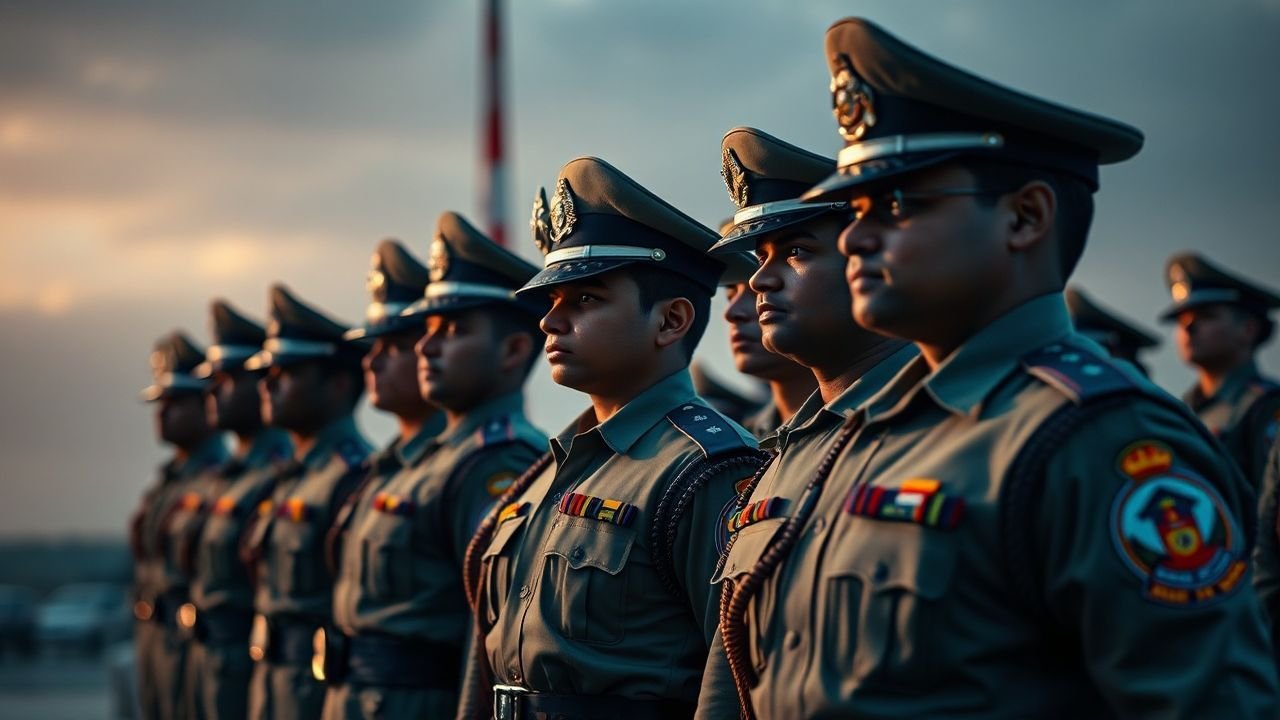
    For many young men across India, the uniform of the armed forces isn’t just a piece of clothing; it’s a symbol of honour, courage, and a profound commitment to the nation. A career in defence offers a unique blend of adventure, leadership, and unparalleled pride that few other professions can match. It’s a calling, a life of purpose that shapes individuals into disciplined, resilient, and resourceful leaders ready to face any challenge. If you’re a male student after 12th contemplating your future, the opportunities presented by the National Defence Academy (NDA) and the Combined Defence Services (CDS) examinations could pave the way for an extraordinary journey of service and distinction.

    A Call to Serve: Why Choose a Career in Defence?

    Opting for a career in the Indian Armed Forces means choosing a life less ordinary. It signifies dedication to a cause greater than oneself, pledging to protect the sovereignty and integrity of the nation. This path offers not just a stable and respected profession, but a transformative experience that builds character, instills leadership, and fosters a sense of belonging to an elite fraternity.

    Beyond a Job: A Life of Honour and Purpose

    Unlike many civilian roles, a career in defence transcends the conventional definition of a job. It’s a commitment to a way of life that is respected by society and enshrined in tradition. Officers are revered for their bravery, integrity, and self-sacrifice. The structured environment, combined with constant challenges, ensures continuous personal and professional growth. You develop essential soft skills like critical thinking, decision-making under pressure, and effective communication—qualities invaluable in any field. While civilian government or private jobs offer different advantages, the defence sector provides a unique sense of identity and contribution to national security.

    Diverse Opportunities and Growth

    The Indian Army, Navy, and Air Force offer a vast spectrum of specialisations. Whether your aptitude lies in technology, logistics, combat, administration, or medicine, there is a role for you. Officers are exposed to cutting-edge technology, participate in strategic planning, and lead diverse teams in dynamic environments. The forces invest heavily in training their personnel, ensuring that officers are always at the forefront of their respective fields, with ample opportunities for higher education and specialisation both within India and abroad.

    Key Pathways to Becoming an Officer: NDA and CDS

    The two most prestigious and direct routes for young men to join the officer cadre of the Indian Armed Forces are through the National Defence Academy (NDA) and the Combined Defence Services (CDS) examinations. These exams are conducted by the Union Public Service Commission (UPSC) and are highly competitive, attracting lakhs of aspirants annually.

    The National Defence Academy (NDA) Examination

    The National Defence Academy (NDA) is a premier tri-service academy that trains future officers of the Indian Army, Navy, and Air Force. This path is specifically designed for students who have completed their 12th grade or are appearing for it. It represents one of the best career options after 12th for those aspiring to join the forces early in their academic journey. Successful candidates undergo three years of rigorous training at the NDA, Khadakwasla, Pune, where they also earn a Bachelor’s degree (B.A./B.Sc./B.Tech.) from Jawaharlal Nehru University (JNU). Following this, they proceed to their respective service academies for pre-commission training before being commissioned as officers.

    The Combined Defence Services (CDS) Examination

    For graduates, the Combined Defence Services (CDS) examination offers a direct entry into various officer training academies. This is a primary route for a career in defence after graduation. The CDS exam recruits for:

    • Indian Military Academy (IMA), Dehradun (Permanent Commission for Army)
    • Indian Naval Academy (INA), Ezhimala (Permanent Commission for Navy)
    • Air Force Academy (AFA), Hyderabad (Permanent Commission for Air Force)
    • Officers’ Training Academy (OTA), Chennai (Short Service Commission for Army, for both men and women)

    The training periods vary for each academy, generally ranging from 11 to 18 months, focusing on military leadership, tactical skills, and physical endurance specific to their chosen service.

    Other Entry Schemes

    While NDA and CDS are the primary routes, other schemes also exist for entry into the officer cadre, catering to specific educational backgrounds or roles. These include the Technical Entry Scheme (TES) for Army and Naval B.Tech Entry for Navy (both for 10+2 PCM students), NCC Special Entry (for NCC ‘C’ certificate holders), Judge Advocate General (JAG) Entry (for law graduates), and AFCAT (Air Force Common Admission Test) for Air Force (for graduates from various streams). These diverse pathways ensure that individuals with different academic strengths can find their niche in the armed forces.

    Eligibility Criteria: Are You Ready for the Challenge?

    To embark on a career in defence, aspirants must meet specific eligibility requirements regarding age, education, physical fitness, and nationality. Adhering to these is the first step towards realizing your dream.

    Age, Educational Qualification, and Nationality

    • For NDA:
      • Age: Candidates must be between 16½ to 19½ years old at the time of joining the Academy. This means you should begin your NDA exam preparation while in 11th or 12th grade.
      • Educational Qualification:
        • For Army Wing of National Defence Academy: 12th Class pass of the 10+2 system of Education or equivalent examination conducted by a State Education Board or a University.
        • For Air Force and Naval Wings of National Defence Academy and for the 10+2 Cadet Entry Scheme at the Indian Naval Academy: 12th Class pass with Physics, Chemistry, and Mathematics from a State Education Board or a University.
      • Nationality: Indian citizen, or a subject of Nepal/Bhutan, or a Tibetan refugee who came to India before 1st January 1962 with the intention of permanently settling in India.
    • For CDS:
      • Age: Generally ranges from 19 to 24/25 years, varying slightly for IMA, INA, AFA, and OTA.
      • Educational Qualification:
        • For IMA and OTA: Degree of a recognized University or equivalent.
        • For Indian Naval Academy: Degree in Engineering from a recognized University/Institution.
        • For Air Force Academy: Degree of a recognized University (with Physics and Mathematics at 10+2 level) or Bachelor of Engineering.
      • Nationality: Same as NDA.

    Physical and Medical Standards

    The Indian Armed Forces demand a high level of physical fitness and robust health. Candidates must meet stringent medical standards to ensure they can withstand the rigours of military training and service. This includes specific requirements for height, weight, vision (including no colour blindness for certain services), hearing, and overall physical and mental well-being. Regular exercise, a balanced diet, and avoiding detrimental habits are crucial for aspiring candidates. Detailed physical and medical standards are outlined in the official notifications released by UPSC, and aspirants are advised to consult them thoroughly.

    Understanding the Exam Pattern and Syllabus

    Success in the NDA exam preparation or CDS exam hinges on a clear understanding of the examination structure and syllabus. Both exams consist of a written test followed by a comprehensive Service Selection Board (SSB) interview.

    NDA Exam Structure and Subjects

    The NDA written examination comprises two papers, each with a duration of 2.5 hours:

    • Paper I: Mathematics (300 Marks)
      • Covers topics like Algebra, Matrices and Determinants, Trigonometry, Analytical Geometry of two and three dimensions, Differential Calculus, Integral Calculus and Differential Equations, Vector Algebra, Statistics and Probability.
    • Paper II: General Ability Test (GAT) (600 Marks)
      • Part A: English (200 Marks) – Focuses on grammar, vocabulary, comprehension, and usage.
      • Part B: General Knowledge (400 Marks) – Divided into sections covering Physics, Chemistry, General Science, History, Geography, and Current Events.

    The total marks for the written exam are 900. Candidates who clear the written exam are then called for the SSB Interview, also carrying 900 marks.

    CDS Exam Structure and Subjects

    The CDS exam pattern varies slightly depending on the academy applied for:

    • For IMA, INA, AFA:
      • English (100 Marks, 2 hours)
      • General Knowledge (100 Marks, 2 hours)
      • Elementary Mathematics (100 Marks, 2 hours)
    • For OTA:
      • English (100 Marks, 2 hours)
      • General Knowledge (100 Marks, 2 hours)

    The syllabus for English focuses on comprehension, grammar, and vocabulary. General Knowledge covers current events, Indian history, geography, science, and politics. Elementary Mathematics includes topics like Arithmetic, Algebra, Geometry, Trigonometry, and Mensuration up to the matriculation level. Similar to NDA, candidates who clear the written exam proceed to the SSB Interview.

    The SSB Interview: A Test of Personality

    The Service Selection Board (SSB) interview is a five-day rigorous selection process designed to assess a candidate’s Officer Like Qualities (OLQs). It is a comprehensive evaluation covering:

    • Screening Test: Day 1 involves Intelligence Rating Tests and Picture Perception & Discussion Test.
    • Psychological Tests: Thematic Apperception Test (TAT), Word Association Test (WAT), Situation Reaction Test (SRT), and Self-Description Test (SD).
    • Group Testing Officer (GTO) Tasks: Group Discussions, Group Planning Exercise, Progressive Group Task, Half Group Task, Lecturette, Individual Obstacles, Command Task, and Final Group Task. These assess teamwork, leadership, initiative, and problem-solving abilities.
    • Personal Interview: A detailed one-on-one interaction with an interviewing officer to gauge personality, motivation, and suitability for the forces.
    • Conference: A final meeting where all assessors evaluate the candidate.

    The SSB focuses not just on knowledge, but on inherent personality traits, leadership potential, and the ability to work under pressure. Preparing for the SSB requires self-awareness and practice in group dynamics and public speaking, honing your communication and teamwork skills.

    Life in the Forces: Training, Leadership, and Adventure

    Joining the defence forces is an entry into a world of structured discipline, continuous learning, and unparalleled experiences. The training academies are designed to transform young civilians into resolute and capable officers.

    Rigorous Training and Holistic Development

    At academies like the NDA, IMA, INA, and AFA, cadets undergo intensive training that encompasses physical conditioning, academic excellence, military drills, and leadership development. The day begins early with physical training, followed by classes covering a wide range of subjects relevant to modern warfare and general knowledge. Evenings are often dedicated to sports, extracurricular activities, and self-study. This holistic approach ensures that officers are not just physically tough but also intellectually sharp and emotionally resilient. The emphasis on camaraderie and teamwork builds lifelong bonds and a strong sense of unit cohesion.

    Career Progression and Specialisations

    Upon commissioning, officers begin their service as Lieutenants in the Army, Sub-Lieutenants in the Navy, or Flying Officers in the Air Force. Promotions are based on performance, experience, and qualifying examinations, leading to higher ranks such as Captain, Major, Colonel, and eventually General Officer ranks. The services offer numerous avenues for specialisation, whether it’s flying fighter jets, commanding warships, leading infantry platoons, serving as an engineer, working in logistics, intelligence, or even engaging in research and development. The scope for professional growth is immense, with opportunities for further education and deputations to various national and international assignments.

    Salary, Perks, and Post-Retirement Benefits

    Beyond the honour and adventure, a career as an officer in the Indian Armed Forces comes with an attractive compensation package and a host of benefits that ensure a comfortable and secure life for officers and their families. Compared to many private sector jobs, the stability and benefits offered are particularly appealing.

    Attractive Remuneration Package

    An officer’s salary is competitive, starting at a decent scale even during the training period (stipend). Post-commissioning, the pay scale increases significantly with rank and experience. In addition to a basic salary, officers receive numerous allowances, including Dearness Allowance (DA), Military Service Pay (MSP), Transport Allowance (TA), Field Area Allowance, High Altitude Allowance, Siachen Allowance, Uniform Allowance, and many more, depending on their posting and role. These allowances significantly enhance the overall take-home pay.

    Comprehensive Benefits and Quality of Life

    The armed forces provide an excellent quality of life through a range of benefits:

    • Medical Facilities: Free and comprehensive medical care for officers and their dependents through military hospitals and ECHS (Ex-Servicemen Contributory Health Scheme) post-retirement.
    • Accommodation: Subsidized housing in cantonments and military stations, often with excellent infrastructure and amenities.
    • Education: Access to military schools and scholarships for children’s education.
    • CSD Facilities: Canteen facilities offering goods at subsidized rates.
    • Travel Concessions: Concessional travel on railways and airlines.
    • Insurance: Group insurance schemes for financial security.

    Furthermore, officers are entitled to a respectable pension after retirement, ensuring financial stability in their later years. There are also numerous post-retirement opportunities, with many ex-servicemen holding significant positions in government, public sector undertakings, and corporate companies, valued for their discipline, leadership, and management skills.

    Embark on Your Journey: Start Your Defence Exam Preparation

    The journey to becoming an officer in the Indian Armed Forces is challenging, but immensely rewarding. It demands dedication, perseverance, and strategic preparation.

    Strategic Preparation is Key

    To succeed in the NDA or CDS exam, a well-structured approach is essential. Begin by thoroughly understanding the syllabus and exam pattern. Create a realistic study plan, dedicating sufficient time to each subject. Regular practice with previous years’ question papers and mock tests is crucial for time management and identifying weak areas. For the written exams, a strong foundation in Mathematics, English, and General Knowledge is paramount. Moreover, parallel to academic preparation, focus on developing physical fitness and the officer-like qualities required for the SSB interview. Just as for UPSC and State PSC exams, consistent effort and a clear strategy are vital for success.

    The Role of Coaching and Mentorship

    While self-study is important, the guidance of experienced mentors and a structured coaching environment can significantly enhance your chances of success. Coaching institutes specializing in NDA and CDS preparation provide expert faculty, comprehensive study materials, regular mock tests, and personalized feedback. They also offer valuable insights into the SSB interview process, conducting mock interviews and GTO tasks to prepare candidates for the psychological and group assessment stages. Such specialized training can help you refine your skills, overcome weaknesses, and build the confidence needed to excel in these highly competitive examinations.

    Choosing a career in defence through NDA or CDS is a decision to embrace a life of honour, adventure, and service. It’s a path for those who dare to dream big, aspire to lead, and commit to safeguarding the nation. If you possess the spirit of patriotism and the desire for an impactful career, begin your NDA exam preparation or CDS exam journey today. With dedication and the right guidance, you too can wear the uniform with pride.

    Ready to turn your aspirations into reality? Explore dedicated defence coaching programs to guide you every step of the way towards a distinguished career in the Indian Armed Forces.